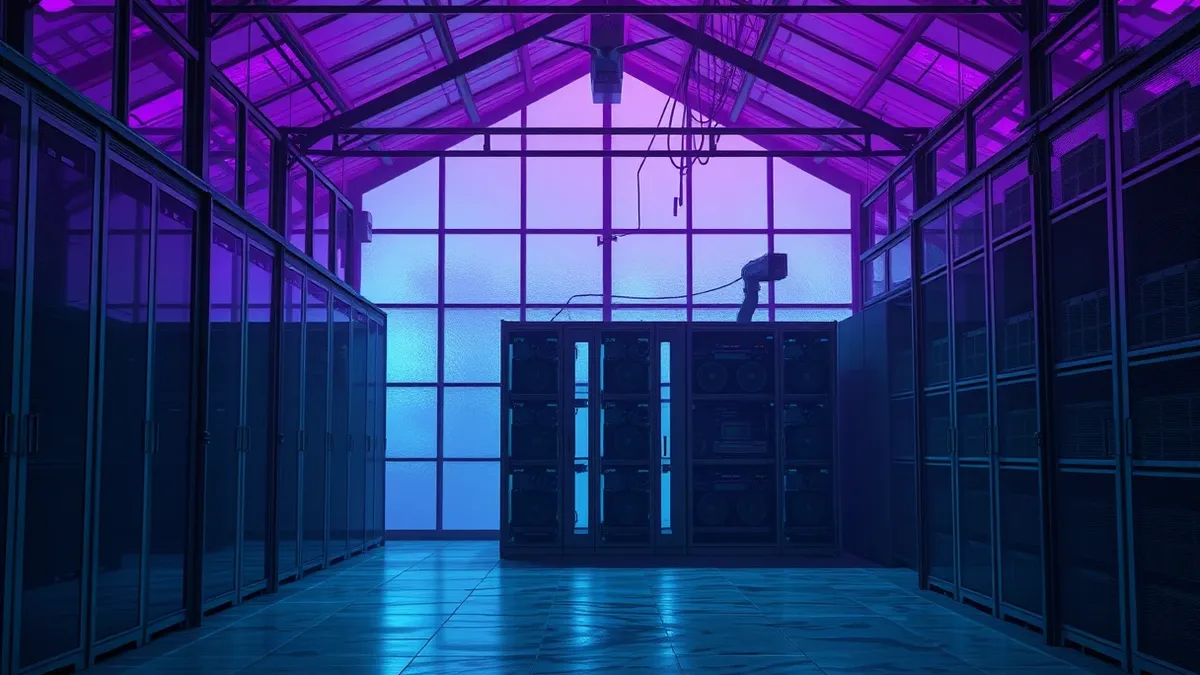
Moe Asnani, former owner of two Tucson dispensaries, stated that these facilities can potentially be repurposed as mini data centre nodes, offering control over data away from centralised updates. He told Arizona Public Media that he is exiting cultivation due to oversupply but sees value in decentralisation.Farmers are turning old weed-growing buildings into small computer centres because selling marijuana is no longer profitable.Operators are leveraging existing high-capacity power and cooling infrastructure in cannabis facilities to deploy decentralised edge compute nodes.
How we got here
The cannabis industry faces decline with sales peaking in 2024, according to the published report Oversupply is driving prices down, while increased competition, costs and taxes reduce demand for marijuana.reported Many growers are leaving the cultivation side of the business entirely.
Evidence: reported
Struggling marijuana farmers pivot to becoming AI data center sites to escape falling weed revenueaifleet-tomshardware
What is new
Growers are considering selling or converting facilities into mini data centre nodes. These sites already possess electricity and water infrastructure that is increasingly hard to secure. Forbes noted a Michigan facility wired for 1.5 megawatts, expandable to 2.5 megawatts in under a year.
What to make of it
OpenAI and Anthropic are interested in small data centres as massive hyperscale sites face community opposition. Tucson City Council member Paul Cunningham described adaptive reuse as a palatable alternative to new builds. He stated that no one wants new data centres but is open to repurposing existing energy-intensive buildings.
What the rules require
The source material does not define specific rules or compliance requirements for model evaluators. It reports that facilities in Arizona and Michigan have pre-existing water and electricity provisions.reported Operators cite decentralisation as a benefit, allowing control over data and updates. The Michigan facility can be expanded to 15 megawatts in the long term, according to Forbes, indicating potential for growth without stating general scalability uncertainty.reported
Why it matters
- Infrastructure sourcing is shifting from new builds to repurposed cannabis facilities, affecting where compute resources are physically located.
- Decentralisation claims by operators may influence how data locality and control are perceived in evaluation frameworks.
- Community opposition to hyperscale sites is driving interest in smaller nodes, potentially altering regional availability of compute capacity.
- Existing power capacities, such as 1.5 megawatt provisions, offer immediate but limited expansion paths for small-scale deployments.
Topics: infrastructure, data centers, cannabis, decentralization, adaptive reuse
Updated
Then / now / next
Cannabis facilities were used exclusively for cultivation despite high energy and water usage.
Growers are converting these sites into mini data centre nodes to escape declining industry revenue.
It remains to be seen if this adaptive reuse model scales significantly beyond initial pilot conversions.
Story timeline
- Then Cannabis facilities were used exclusively for cultivation despite high energy and water usage.
- 12 Nov 2026 Struggling marijuana farmers pivot to becoming AI data center sites to escape falling weed revenue
- Now Growers are converting these sites into mini data centre nodes to escape declining industry revenue.
- Next It remains to be seen if this adaptive reuse model scales significantly beyond initial pilot conversions.
The strongest doubt
Counterpoint from the sources
An expert noted that success still depends on the perfect confluence of cheap power, favourable regulation and reliable connectivity, suggesting not all sites are viable.
For readers
Business
- Repurposing existing facilities can accelerate deployment by leveraging pre-wired power and water infrastructure.
- Decentralised nodes offer an alternative to community-resistant hyperscale builds in urban areas.
Policy
- Local officials may view adaptive reuse as more acceptable than new construction due to existing energy footprints.
- Regulatory environments must support the conversion of agricultural sites to industrial tech uses.
Researchers
- The shift to mini nodes may alter the geographical distribution of compute resources.
- Decentralisation claims require verification regarding actual data control and update independence.
Ask the article
Local keyword search of this article; no generated answers.Did this article give you the evidence you needed?
Your choice stays on this device. No public tally.Terms in this story
Adaptive reuse
Repurposing existing buildings for new functions, such as converting cannabis farms to data centres.
Mini data centre nodes
Small-scale computing facilities that offer decentralised control over data and updates.
Hyperscale sites
Massive, purpose-built data centre locations that often face community opposition.
Questions readers ask
Why are cannabis farmers switching to data centres?
Falling marijuana revenue due to oversupply and high costs is pushing growers to repurpose their facilities for more profitable AI infrastructure.
What infrastructure do these sites already have?
They possess significant electricity capacity, water infrastructure, fiber internet provisions and advanced HVAC systems for climate control.
Is this trend limited to one region?
No, examples are cited from Tucson, Arizona, and Kalamazoo, Michigan, indicating a broader potential for adaptive reuse.
Connected stories
Reading receipt
- Cannabis sales peaked in 2024, driving oversupply and price declines that push growers out of cultivation.
- Former owners are repurposing power-rich facilities into decentralised mini data centre nodes.
- Adaptive reuse offers a palatable alternative to massive new builds facing community opposition.
Still open: How many cannabis facilities are actually being converted versus just considered?
Still open: What are the specific regulatory hurdles for converting agricultural zones to data centre use?